
Whose hands created the hospitality, and who got the credit?
From 201 to the Lorraine Motel, I am from Memphis. No need to say Tennessee, because Memphis stands on its own. Like Beyoncé. Lol.
Being a girl from the South, I have heard the phrase Southern hospitality my whole life. I thought it meant the sweetness. Yes, ma’am. No, ma’am. A hug before you even knew you needed one. Speaking to people you have never met. A cold glass of sweet tea waiting on the kitchen table.
It is the language I have used to describe the kind of welcome I want people to feel at Floral & Spice. Then, at three o’clock one morning while trying to process life, I wondered where the phrase even came from. I started searching. And everything about it shifted.
Because Southern hospitality did not become lavish and effortless by magic. The homes praised for their welcome were made possible by enslaved Black people who cooked the food, carried the trays, poured the tea, tended the rooms, and served the guests. White planters and their wives were remembered as gracious hosts and hostesses. Black hands made the welcome possible.
And I sat there thinking, Damn. Who did they call hospitable?
Look at what disappeared.
In July 1796, English architect Benjamin Henry Latrobe visited Mount Vernon. He recorded dinner and coffee at George and Martha Washington’s home. According to Mount Vernon’s research, Hercules and Lucy, both enslaved, prepared the dinner. Frank Lee, Marcus, and Christopher Sheels served it.
Latrobe first sketched the coffee scene with an enslaved man standing behind the table, possibly Frank Lee. In the completed watercolor, he is gone.
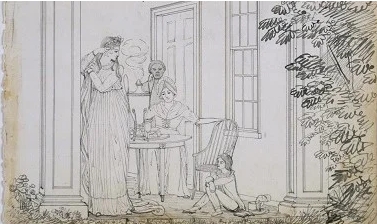
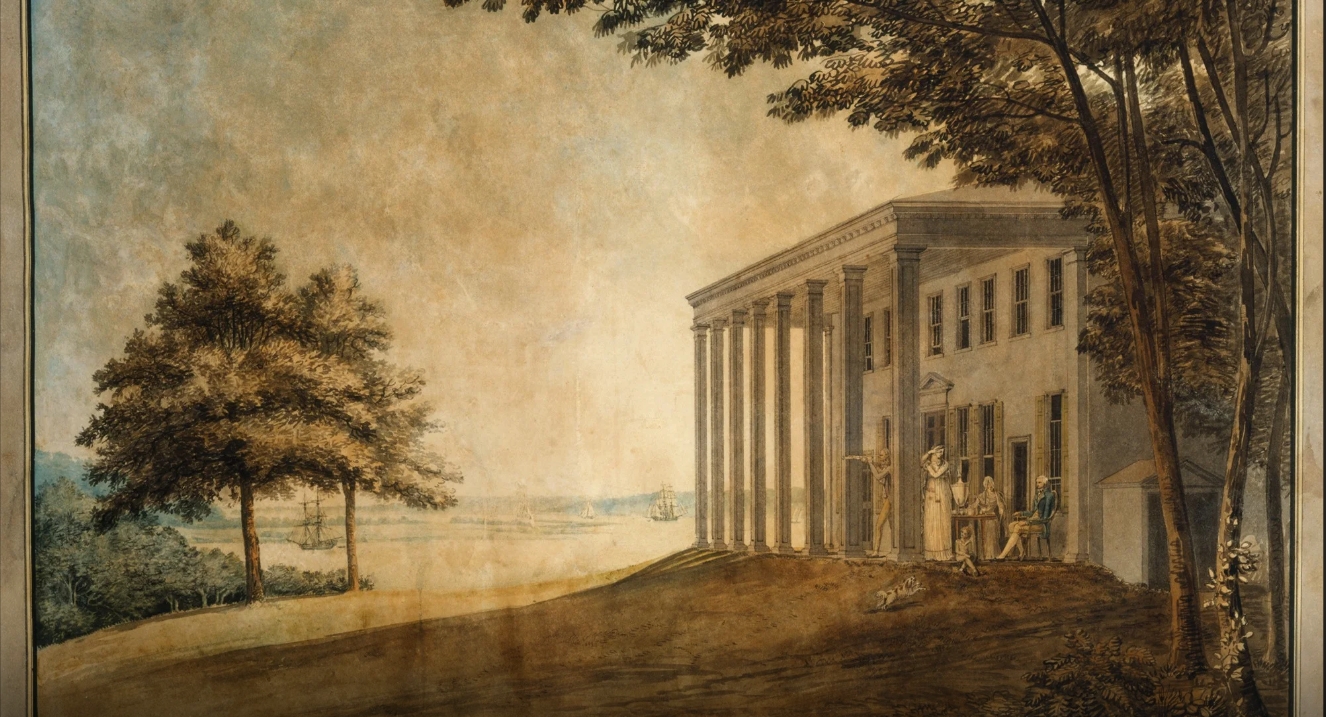
That is the part that stays with me. Not because I need a perfect answer from a painting, but because the question is right there. A person who helped create the scene is visible in the first telling. Then he is no longer there in the version people remember.
The work behind the welcome.
Learning to become a hostess is so much more than setting a table or picking the right linen for the evening. Hospitality is a feeling. It has to simmer. It is like a roux or a gravy. You build it slowly, paying attention to what is happening in the pot.
A real welcome takes thought. It notices the need before somebody has to ask. It makes room for imperfection. It lets people forget, for a minute, the pieces of life that have been hard. But when we talk about hospitality without naming who did the labor, we can turn that beauty into something hollow.
What did a white woman have to do to be remembered as a gracious hostess? And what did the people she enslaved have to do to make that reputation possible?
I am learning not to chase only the glitz and glamour of the word. I want the beautiful table, yes. I want the flowers and linen and something good coming out of the kitchen. But I also want to sit with the sticky shit. Who cooked? Who cleaned? Who carried the emotional weight of the room? Who gets thanked, named, paid, and invited to sit down?
Emma’s sweet tea.
I remember being a kid at my grandmother Emma’s house. She would be in her garden, and there would be a pitcher of sweet tea on the kitchen table. That was the welcome. That was the hug after a long day.
No big speech. No performance. Just an ice-cold glass of Southern sweet tea.
That is what home has meant to me. A person making it known that there is room for you. Emma was not a symbol. She was a woman with her own way of loving people. Her tea was a choice. Her welcome was hers.
The table I’m building now.
When I build Floral & Spice, I want to bring that feeling back. I want the kitchen table back. I want a Black woman to walk into the room and feel safe enough to exhale. I want her to know she is expected here, not merely accommodated.
And I want to be honest about what makes that possible. The person who cooks should be named. The person arranging flowers should be credited. The woman who has been on her feet all night should get a plate and a chair, too. There must be room for the woman creating the space, not just the people who get to enjoy it.
So I am holding on to the question. The next time you leave a table feeling cared for, ask yourself: Who made you feel that way? Did you know their name?
See you at the table,
Ronisha
Historical scene and image context: George Washington’s Mount Vernon, “Labor in the Mansion”.